


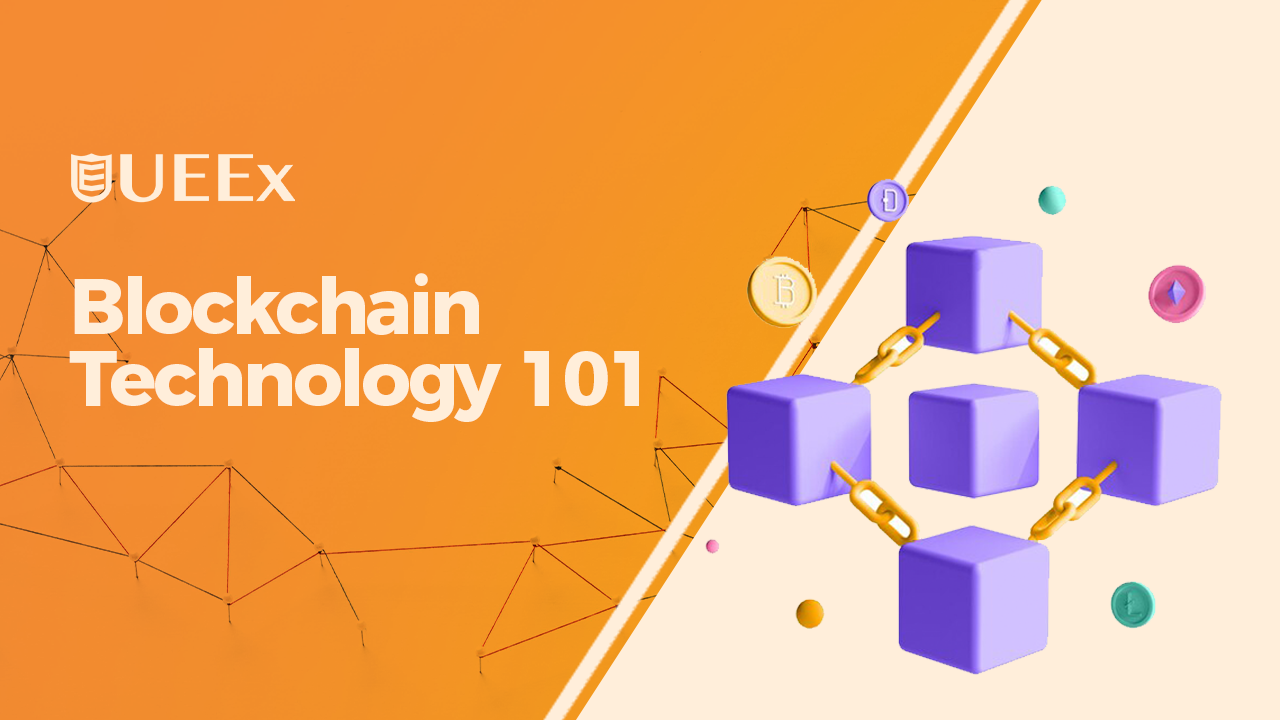
Picture a shared Google Doc that millions of people can view, but no single person can secretly edit or delete.
That’s the basic idea behind blockchain — a digital record-keeping system where every change is visible, verified, and permanent.
Understanding what blockchain is matters now more than ever, since it powers everything from Bitcoin to supply chains tracking your groceries.
Brief History of Blockchain
The origin and history of blockchain can be traced back to the early 2000s when researchers Stuart Haber and W.
Scott Stornetta first proposed the concept of a system for timestamping digital documents to prevent tampering.
They introduced the idea of cryptographically secured chains of blocks, which formed the fundamental basis of blockchain technology.
However, it was not until 2008 that blockchain gained widespread recognition with the advent of Bitcoin.
In a groundbreaking whitepaper titled “Bitcoin: A Peer-to-Peer Electronic Cash System,” published by the mysterious entity known as Satoshi Nakamoto, the concept of blockchain was introduced as a decentralized and secure ledger for recording Bitcoin transactions.
Join UEEx
Experience the World’s Leading Digital Wealth Management Platform
Sign UP
Nakamoto successfully combined cryptographic techniques, peer-to-peer networks, and game theory to create a practical implementation of blockchain.
On January 3, 2009, Nakamoto mined the first block, known as the Genesis Block, marking the birth of Bitcoin and the beginning of the blockchain era.
Since then, blockchain technology has evolved beyond cryptocurrencies, with the introduction of platforms like Ethereum in 2015, which expanded the functionality of blockchain by enabling the development of decentralized applications (DApps) and smart contracts.
The potential of blockchain technology has then gained recognition in various industries, leading to its exploration and implementation in areas such as supply chain management, healthcare, voting systems, identity verification, and more.
Key Elements of Blockchain

1. Distributed Ledger Technology
In a traditional centralized database, the source of truth resides with the controlling entity and access is limited.
But with blockchain’s distributed ledger technology, all participants have a complete copy of the records that act as the canonical source of truth residing across millions of nodes.
This distributed nature makes the ledger resilient against manipulation or tampering as changing one copy would require changes to all others across the network through a rigorous consensus mechanism.
2. Immutable Records
Once a block of transactions is recorded and chained onto the growing ledger using cryptographic hashes, it becomes almost impossible to alter any records retrospectively without detection.
Any change to a past block hash would invalidate all subsequent hashes in the chain due to the sequential nature of hashes.
This fixed record state ensures absolute transparency, verifiability and dependability of information throughout its lifespan.
3. Smart Contracts
Smart contracts not only execute business processes autonomously but also fulfill contractual clauses objectively without the risk of manipulation, subjectivity or control failure.
They improve efficiency by removing friction caused by manual oversight of intermediaries in validation, enforcement or dispute resolution.
Smart contracts gain more mainstream adoption every year as they enable digitization of agreements and decentralization of processes across many industries.
Join UEEx
Experience the World’s Leading Digital Wealth Management Platform
Sign UP
4. Decentralization
Decentralization is a fundamental characteristic of blockchain technology.
Unlike traditional centralized systems where a central authority controls and verifies transactions, blockchain operates on a distributed network of computers (nodes).
These nodes work together to validate and record transactions, eliminating the need for a central intermediary.
Decentralization enhances transparency, security, and trust as no single entity has absolute control over the network. It also makes blockchain resistant to censorship and single points of failure.
5. Cryptography
Cryptography plays a crucial role in securing the integrity and privacy of data in a blockchain. It involves the use of cryptographic algorithms to encrypt and verify transactions.
Each transaction is digitally signed by the sender using their private key, and the signature is validated by the recipient using the corresponding public key.
This ensures that only the authorized parties can initiate and verify transactions.
Additionally, cryptographic hash functions are used to generate unique identifiers (hashes) for each block, creating a tamper-evident record.
Cryptography also enables anonymity or pseudonymity, allowing participants to interact with the blockchain without revealing their real-world identities.
6. Consensus Mechanisms
Consensus mechanisms are protocols that facilitate agreement among network participants on the validity of transactions and the order in which they are added to the blockchain.
They ensure that all nodes in the network reach a common consensus and maintain the integrity of the distributed ledger.
Popular consensus mechanisms include Proof of Work (PoW), where nodes compete to solve complex mathematical puzzles to validate blocks, and Proof of Stake (PoS), where validators are chosen based on their stake in the network.
Other mechanisms like Delegated Proof of Stake (DPoS), Practical Byzantine Fault Tolerance (PBFT), and Proof of Authority (PoA) are also used in different blockchain implementations.
Who Runs a Blockchain? Understanding Nodes
A blockchain only works because thousands of computers — called nodes — are running it simultaneously. Each type of node plays a different role.
Full nodes store the entire blockchain history and independently verify every transaction.
Anyone can run one; this is what makes a blockchain decentralized rather than controlled by a single company. As of 2026, Bitcoin has over 15,000 reachable full nodes spread across the globe.
Miners and validators are the nodes that actually create new blocks. In Proof of Work systems like Bitcoin, miners compete using computing power.
In Proof of Stake systems like Ethereum, validators lock up cryptocurrency as collateral — Ethereum now has over 800,000 validators securing its network.
Light nodes store only part of the blockchain and rely on full nodes for verification. This is what your mobile crypto wallet is running it would be impractical to download hundreds of gigabytes onto a phone.
Benefits of Blockchain

Blockchain technology offers several benefits, including:
1. Elimination of Duplicate Record Keeping
Having consistent records across multiple systems is costly, error-prone, and wasteful. With blockchain, a single identical ledger removes this redundancy instantly.
All parties refer to the same immutable source of truth, eliminating the need for bilateral reconciliations and verifications. This streamlines operations and reduces compliance risks.
2. Increased Trust and Security
No central authority or intermediary controls access or modification permissions on the blockchain.
Each participant entity manages their own identities and privileges through public-key cryptography.
Transactions are signed digitally, time-stamped and recorded immutably across hundreds or thousands of validated nodes.
Audit trails become transparent and forensic. This distributed framework fosters a trust infrastructure like never before.
3. Efficiency Through Distributed Ledgers and Smart Contracts
Automated execution of contracts reduces delays from oversight or intermediation.
Distributed access further cuts cycles as multiple parties can act on the same data simultaneously versus being bottlenecked at any one center.
Combining these speed, convenience while removing operational and behavioral inefficiencies across the network.
Join UEEx
Experience the World’s Leading Digital Wealth Management Platform
Sign UP
4. Transparency into Asset Histories and Provenance
Whether tracking food, diamonds or machinery across global supply chains, blockchain provides documentary evidence of authenticity, ownership and condition throughout the full lifecycle.
This enhances accountability, trust and decision making.
5. Reduced Counterparty Risks
Smart contracts eliminate exposure to default by partial or failed contractual fulfillment from any actor. pre-defined self-enforcing logic assures outcomes, lowering credit requirements.
Members also benefit from increased data visibility into each other.
How Blockchain Works

Blockchain functions on the principle of distributed ledgers that eliminate the need for centralized record keeping by enabling consensus between all participants in the peer-to-peer network.
Let me explain the key mechanisms in detail:
Recording transactions as blocks of data
Each transaction that occurs – whether it’s transferring crypto tokens, recording a logistics update or executing a smart contract – gets bundled into a block along with a cryptographic hash of the previous block.
This collects multiple individual events into a single chainable record.
Connecting blocks in a chain
Fresh blocks are then added onto the existing blockchain in a linear manner.
The new block contains the hash of the prior block, effectively linking the blocks together in chronological order like a chain.
This sequential linking forms the backbone of the append-only nature of the distributed ledger.
Ensuring transaction time, sequence, and security
Each block also carries a timestamp to verify the order and time of included transactions cryptographically.
Nodes on the network verify new blocks against a protocol like proof-of-work or proof-of-stake to ensure security and consensus before they can be added.
This validation process maintains integrity.
Building a tamper-evident and trusted ledger
Once a block is accepted by validation, it becomes permanent on the ledger and linked permanently through its cryptographic hash relationship to the hashes in preceding blocks.
Now if anyone tries to reverse or modify an earlier transaction, they would have to redo all subsequent cryptographic hashes – a herculean task that provides immutability and integrity.
Validation through distributed consensus
All nodes on the network maintain an identical copy of the ledger and must agree that a block is valid before it’s appended, through protocols like proof-of-work involving computationally intensive cryptographic operations or stake-based voting based on tokens held.
This distributed validation method maintains consistency without centralized supervision.
Incentivizing network nodes
On public blockchains, validator nodes are incentivized through block rewards or transaction fees to participate in maintaining ledger integrity.
This game theoretic approach makes attacks costly and ensures the network remains both decentralized and robust over time.
Join UEEx
Experience the World’s Leading Digital Wealth Management Platform
Sign UP
Types of Blockchain Networks
Blockchain architectures can be public, private or hybrid depending on their deployment goals and intended users.
Proper identification of access models helps apply the right blockchain type for specific industry and compliance needs.
1. Public Blockchain Networks
Public networks allow complete anonymity for users and are totally open and trustless systems. Validation is done through computationally-intensive Proof-of-Work mining to achieve distributed consensus.
Examples include Bitcoin and Ethereum supporting decentralized cryptocurrencies and applications.
Benefits include truly open participation without entry barriers.
However, anonymity also allows potential misuse and their energy consumption model presents sustainability concerns restricting enterprise adoption.
2. Private Blockchain Networks
These closed permissioned networks are similar to conventional centralized databases but with added encryption and an append-only ledger structure.
A single entity controls network access and validation, bypassing mining for effectiveness. Hyperledger Fabric is widely used for such deployments.
Benefits are enhanced privacy and customization for specific organizational needs.
Downsides are weaker security than public chains due to single point of failure.
3. Permissioned Blockchain Networks
Similar to private blockchains, participation and validation requires prior authorization.
But no single entity can modify records unilaterally; the distributed trust model is kept through consensus of authenticated members.
Examples are Ripple, R3 Corda and a few Industry specific networks.
Benefits are stronger security than private chains while retaining privacy and customization. Resource-efficient alternative to energy wasteful mining.
4. Consortium Blockchains
A permissioned model where transaction validation is controlled by pre-selected validators representing different member organizations jointly.
Quorum blockchain developed by JP Morgan is popular for financial services.
Benefits the distributed trust of a consortium for industries seeking shared infrastructure in compliance-sensitive networks.
Has better transparency than private systems.
Why Layer 2 Matters for Blockchain in 2026
One of blockchain’s biggest limitations is speed. Bitcoin processes roughly 7 transactions per second, and Ethereum handles around 15-30.
Compare that to Visa, which processes over 65,000 transactions per second and the scaling problem becomes obvious.
Layer 2 solutions solve this by handling transactions off the main blockchain while still relying on it for security.
On Bitcoin, the Lightning Network creates payment channels between users for instant, near-free transactions.
On Ethereum, rollups like Arbitrum, Optimism, and Base bundle hundreds of transactions into a single batch that settles on the main chain.
As of 2026, Layer 2 networks on Ethereum process more transactions than Ethereum’s main chain itself, often with fees below one cent.
This is why most active crypto users today are transacting on Layer 2 networks without necessarily realizing it, the base blockchain provides security, while Layer 2 provides the speed and low cost that make everyday use practical.
Join UEEx
Experience the World’s Leading Digital Wealth Management Platform
Sign UP
The Blockchain Trilemma— Why No Blockchain Does Everything Perfectly
Every blockchain design involves trade-offs between three properties: decentralization, security, and scalability (speed).
This is known as the blockchain trilemma, the idea that it’s extremely difficult to maximize all three at once.
Bitcoin prioritizes decentralization and security, which is why it’s slow and energy-intensive.
A small private blockchain run by one company can be extremely fast, but it sacrifices decentralization defeating much of the point of using a blockchain in the first place.
Newer chains like Solana attempt to push scalability higher using different architectural choices, but questions about how decentralized and battle-tested their security really is remain part of ongoing industry debate.
Understanding the trilemma helps explain why there’s no single “best” blockchain only blockchains optimized for different priorities.
When evaluating any blockchain project, the trilemma is the lens worth applying: what is this chain optimizing for, and what is it giving up to get there?
Applications of Blockchain
Blochain already has wide adoption and application. Here are few of them:
Healthcare
Medical record storage and access is being decentralized using blockchains.
Patients directly manage consent to share their encrypted health records with providers and researchers seamlessly.
Other areas include clinical trials, research, insurance claims processing etc.
Oil and Gas
Upstream exploration data, refining records, shipping logs and commerce transactions in this capital intensive industry are ripe for blockchain to bring transparency and efficiency benefits across transaction-heavy asset-heavy supply chains.
Provenance tracking of materials is a major use case.
Retail and Supply Chain
Major companies are already using blockchain in production, not just pilots.
Walmart uses blockchain to trace food products back to their source in seconds rather than days, critical during contamination recalls.
Maersk, the shipping giant, built a blockchain platform (TradeLens) to track cargo containers across global supply chains, reducing paperwork and fraud.
De Beers uses blockchain to track diamonds from mine to retail, verifying they’re conflict-free.
For retail loyalty programs, blockchain enables points and rewards that can be transferred or redeemed across different brands without the friction of traditional siloed loyalty systems.
The common thread across all these examples: blockchain doesn’t replace the product or service, it adds a verifiable record layer on top of processes that already existed, making fraud and errors dramatically harder to hide.
Join UEEx
Experience the World’s Leading Digital Wealth Management Platform
Sign UP
Challenges and Limitations of Blockchain
Scalability issues and transaction throughput
Public proof-of-work blockchains can currently process a limited number of transactions per second – around 7 for Bitcoin and 15 for Ethereum.
This restricts their ability to scale for widespread enterprise and consumer-level usage.
Various scaling solutions are being explored by different blockchains to increase capacities.
Energy consumption and environmental impact
The energy-intensive mining process for proof-of-work blockchains results in greenhouse gas emissions.
As the amount of miners and transactions grows exponentially, this could significantly strain electricity grids. Alternatives like proof-of-stake are being adopted to reduce mining energy needs.
Regulatory and legal considerations
The decentralized nature of blockchain raises challenges in governing activities like securities trading, money transmission and consumer protection in the absence of oversight and laws.
Regulators worldwide are still evaluating the legal status of cryptocurrencies and smart contracts.
Privacy and data protection concerns
Since blockchain transactions are recorded on distributed ledgers publicly, they reveal metadata like balances, wallets, transactions that can compromise personal privacy if identities are known.
Solutions to hide transaction details are being proposed through techniques like ring signatures and zero-knowledge proofs.
Interoperability and standardization challenges
Integrating different blockchain platforms and bridging centralized-decentralized systems requires common protocols to enable cross-chain activities, data portability and feature exchange.
Interoperability standards are a work in progress.
Adoption barriers and cultural resistance
Mainstream adoption faces impediments from organizational resistance to change, lack of expertise within enterprises and user-adoption barriers for new decentralized applications.
Sustained education and evangelism is needed for larger perception shifts.
Frequently Asked Questions
Why is blockchain considered secure?
Security comes from combining cryptographic hashing (which makes altering past records computationally infeasible) with distributed consensus (thousands of independent computers must agree on what’s valid).
Both would need to be defeated simultaneously, across a global network, for a major chain to be compromised.
Is blockchain the same as cryptocurrency?
No. Blockchain is the underlying technology — a way of recording data. Cryptocurrency is one application of that technology.
Conclusion
Blockchain isn’t just the technology behind Bitcoin, it’s a new way of keeping records that doesn’t require trusting a single company or institution.
Whether it’s tracking a shipping container, securing a medical record, or settling a crypto trade, the core idea stays the same: a shared, verifiable truth that nobody can quietly rewrite.