


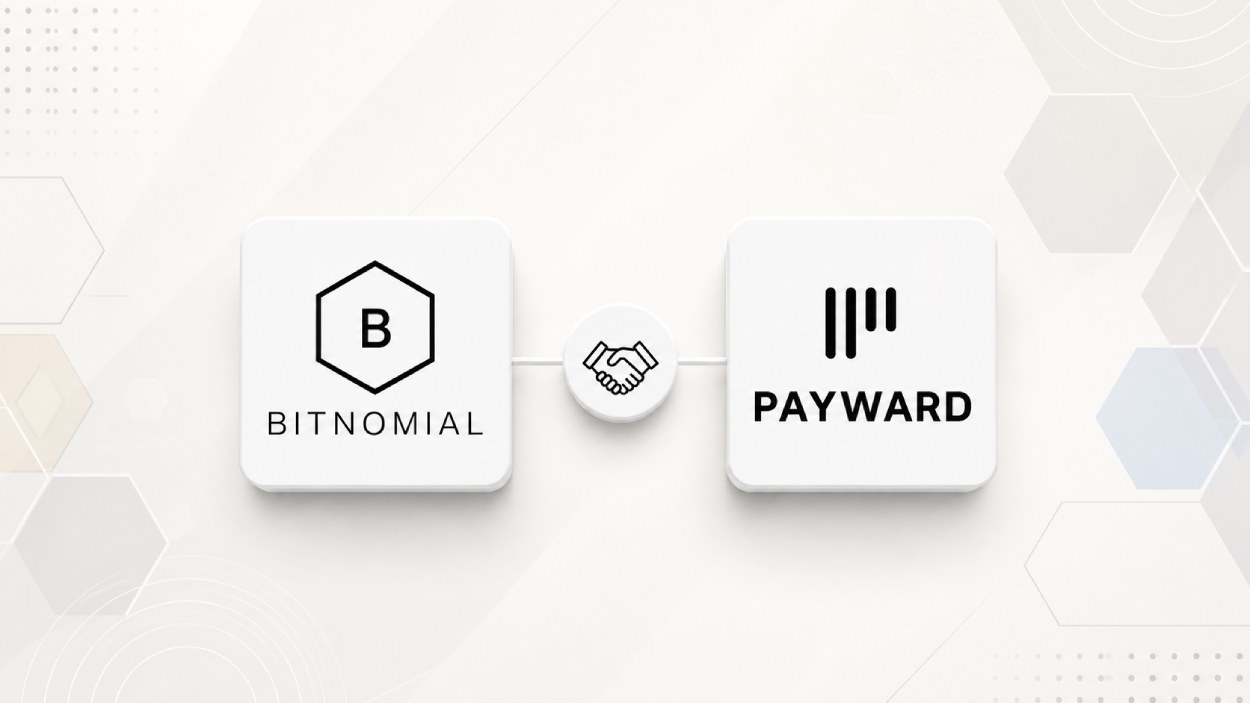
Payward has completed its acquisition of Bitnomial, enabling Kraken to offer regulated crypto derivatives products in the United States.
Key Takeaways
- Payward, parent of Kraken, has finalized the acquisition of Bitnomial.
- The deal grants a full suite of CFTC licenses, unlocking regulated derivatives trading in the US.
- Kraken will start with spot margin trading, followed by perpetuals and options.
- The move positions Payward as a broker, exchange, and clearinghouse in one integrated structure.
What Happened?
Payward has officially completed its acquisition of Bitnomial, a Chicago-based crypto derivatives platform. The deal allows the company to enter the regulated US derivatives market with full approval from the Commodity Futures Trading Commission.
The company plans to roll out spot margin trading first, with additional derivatives products like perpetual futures and options expected to follow in later phases.
🚨 KRAKEN CAN NOW OFFER U.S. CRYPTO DERIVATIVES
Kraken parent Payward has completed its acquisition of Bitnomial, a crypto-native derivatives platform licensed by the CFTC.
Payward now has the full U.S. derivatives stack needed to offer CFTC-regulated spot margin, perpetuals… pic.twitter.com/8gMgz5JBb9
— Coin Bureau (@coinbureau) May 4, 2026
Payward Unlocks Full US Derivatives Infrastructure
With this acquisition, Payward now holds a complete set of US regulatory licenses, including Futures Commission Merchant, Designated Contract Market, and Derivatives Clearing Organization approvals. This makes it one of the few firms in the country capable of operating across the entire derivatives value chain.
This integrated structure allows Payward to act as:
- A broker handling client trades.
- An exchange where trades are executed.
- A clearinghouse managing settlement and risk.
According to the official announcement, this setup will enable the launch of regulated margin trading, perpetual contracts, and options for both Kraken and NinjaTrader users in the US.
Product Rollout Begins With Spot Margin
Arjun Sethi, co-CEO of Payward and Kraken, confirmed that the first product under this new framework will be spot margin trading.
He said:
After the initial rollout, the company plans to expand into:
This phased approach allows Payward to build liquidity and ensure compliance before scaling further.
Bitnomial Continues Operations Under Payward
Despite the acquisition, Bitnomial will continue operating within the Payward group, retaining its:
- Existing licenses
- Regulatory structure
- Core team and operations
The company also plans to expand Bitnomial’s workforce as it scales its derivatives business in the US.
Importantly, the platform will continue serving third party clients, including banks, brokers, and fintech firms. These partners will now be able to offer regulated crypto derivatives products to their own customers using Payward’s infrastructure.
Expanding Access to Crypto Derivatives
Bitnomial is known for offering crypto margined and crypto settled derivatives, supporting assets such as:
The platform enables trading across:
- Physically delivered futures
- Perpetual contracts
- Options markets
This acquisition bridges the gap between the global crypto derivatives ecosystem and the more regulated US financial system.
Deal Value and Strategic Context
While final terms were not disclosed, earlier estimates suggested the deal could be worth up to $550 million in cash and stock. At the time, Payward’s valuation was reported at around $20 billion.
The acquisition also aligns with Payward’s broader strategy to build a global network of licensed trading platforms, with earlier expansions in the United Kingdom and the European Union.
CoinLaw’s Takeaway
In my experience, this is one of the most important structural moves we have seen from a crypto exchange in the US. I found that most platforms struggle with regulation when it comes to derivatives, but Payward has taken a different route by securing the entire licensing stack.
This gives Kraken a serious edge. It is not just about offering new products, it is about owning the infrastructure behind them. That changes how institutions and large investors will look at the platform.
I believe this move could push competitors to rethink their US strategy, especially as demand for regulated crypto derivatives keeps growing.