


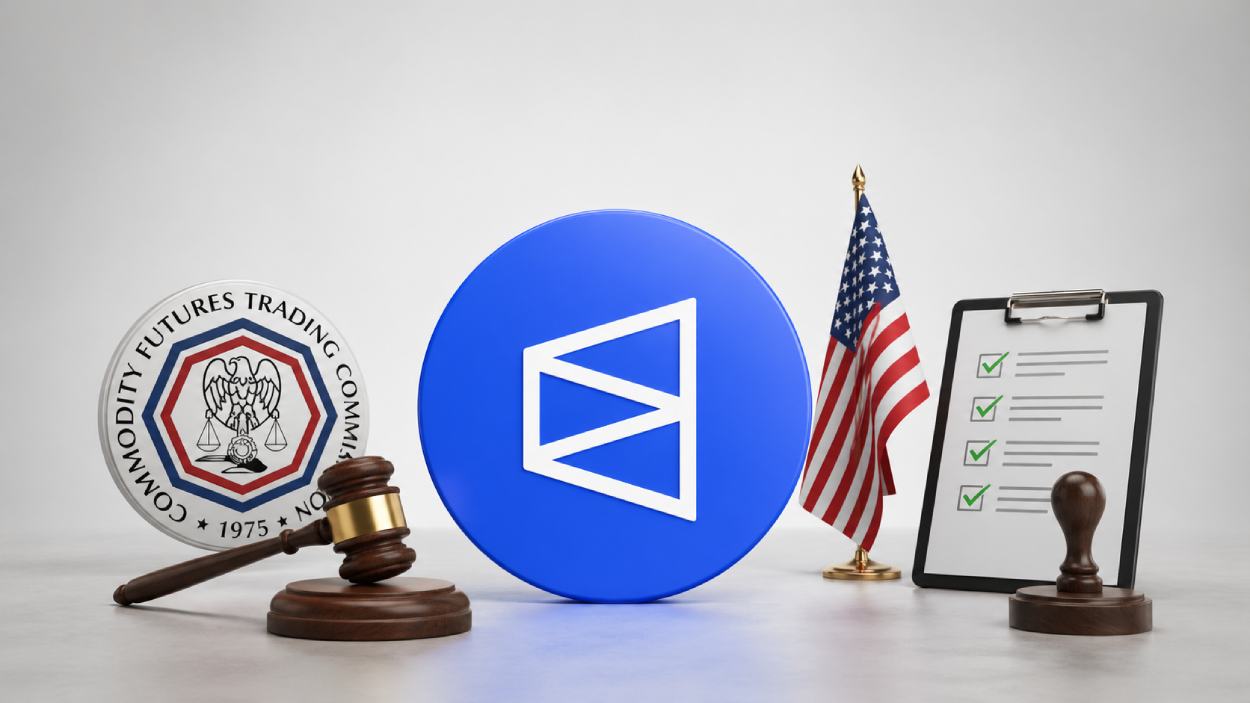
Polymarket is working with US regulators to bring its main prediction market platform back to American users after years of restrictions.
Key Takeaways
- Polymarket is in talks with the Commodity Futures Trading Commission to lift its US trading ban.
- The platform previously exited the US after a 2022 settlement involving a $1.4 million fine.
- A return would require strict compliance including identity checks and market surveillance.
- The move could intensify competition with rivals like Kalshi and reshape prediction markets in the US.
What Happened?
Polymarket has recently held discussions with the Commodity Futures Trading Commission about allowing US users back onto its main exchange. The talks signal a potential reversal of its earlier decision to block American traders following regulatory action in 2022.
JUST IN: ⚡ Polymarket is seeking CFTC approval to let US users trade on its main exchange after being blocked since 2022, per Bloomberg. pic.twitter.com/uWxNte1O3J
— CoinMarketCap (@CoinMarketCap) April 28, 2026
Polymarket Seeks Regulatory Approval for US Return
Polymarket is making a fresh attempt to reenter the US market by seeking formal approval from the Commodity Futures Trading Commission. According to Bloomberg reporting, the company has been in active discussions with officials in recent weeks about lifting its long standing restriction on US-based users.
The restriction dates back to a 2022 settlement, where Polymarket agreed to stop serving US customers after being accused of offering unregistered binary options contracts tied to real world events. As part of that settlement, the company paid a $1.4 million penalty, shut down non-compliant markets, and implemented measures to block US access.
Now, the company is exploring a compliant path forward that would allow it to operate legally within the United States under a licensed framework.
Regulatory Landscape and CFTC Role
The Commodity Futures Trading Commission plays a central role in determining whether Polymarket can resume operations in the US. Any decision to lift the ban would require a formal vote by the commission.
At present, the agency is operating with only one sitting commissioner, Chairman Michael Selig, as the remaining seats are vacant. This unusual structure has drawn attention from lawmakers concerned about governance and oversight.
Selig has previously maintained that prediction markets fall under federal jurisdiction, arguing that states do not have authority over such platforms. This stance has led to legal clashes, including lawsuits filed by the agency against several states over their attempts to regulate or restrict event based trading markets.
Prediction markets, which allow users to trade on outcomes like elections, sports, or economic indicators, have faced increasing scrutiny. Critics argue they resemble gambling platforms operating without proper licensing at the state level.
Plans to Merge Global and US Operations
As part of its strategy, Polymarket is reportedly considering integrating its global blockchain based platform with its US licensed entity. The company had previously acquired a regulated exchange, enabling it to launch a US specific platform, though that version remains limited and has not fully rolled out.
The proposed approach could involve merging its advanced blockchain infrastructure with regulatory licenses, potentially allowing it to operate a unified platform within the bounds of US law.
This move would mark a significant shift from its earlier offshore model toward a more compliant and regulated structure.
Platform Upgrades and Expansion Efforts
Alongside regulatory efforts, Polymarket is continuing to upgrade its technology. The platform recently launched its CLOB v2 upgrade, introducing improvements such as:
- A rebuilt central limit order book backend.
- New smart contracts for trading.
- A new collateral token called pUSD, pegged 1-to-1 with USDC on the Polygon network.
To support liquidity, the company also introduced $1 million in trading incentives, aimed at attracting users to the upgraded system.
These updates signal Polymarket’s broader ambition to scale its platform while aligning with regulatory expectations.
Compliance Challenges and Market Risks
A return to the US would require Polymarket to implement stricter compliance measures, including:
The push for approval comes amid heightened scrutiny. In a recent case, authorities accused a US soldier of using a VPN to access Polymarket’s offshore platform and reportedly earning over $400,000 through trades based on classified information. The incident highlights ongoing risks tied to unregulated access.
CoinLaw’s Takeaway
In my experience, this is a defining moment for prediction markets. Polymarket is not just trying to return to the US, it is trying to prove that crypto based event trading can fit within traditional regulation.
I found that the biggest challenge here is trust. Regulators want control and transparency, while platforms want speed and global reach. If Polymarket succeeds, it could open the door for a new class of regulated crypto financial products in the US.
But if it fails, it will reinforce the idea that these platforms belong outside US borders. That is why this approval process matters far beyond just one company.