



Will Solana bounce back in 2026?
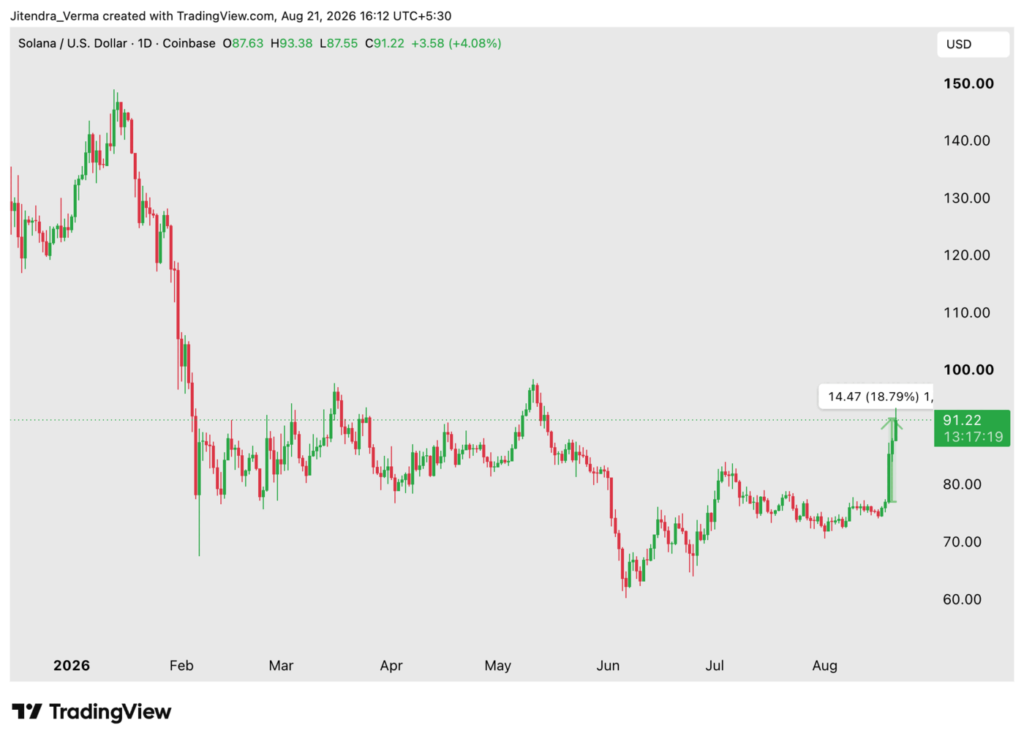
Will Solana bounce back in 2026? After a brutal first half, SOL just answered part of that question itself: on August 21, the daily candle flagged an 18.79% single-day move, part of a rally that has taken SOL from around $74 to over $91 in a matter of days. The real question isn’t whether SOL can bounce, it just did, it’s whether this bounce back has real legs or is a macro-driven blip on top of a still-damaged chart.
This guide covers what triggered the rally, what the derivatives data is actually showing, and the real catalysts (and risks) that will decide whether Solana recovery 2026 sticks. If you’ve been asking when will Solana recover or whether SOL price rebound momentum can last, this is the honest answer.
Key Takeaways
- SOL fell from an all-time high near $293 (January 2025) to roughly $60 by June 2026, before rallying sharply in the past few days to trade above $91, part of a genuine Solana comeback 2026 in progress.
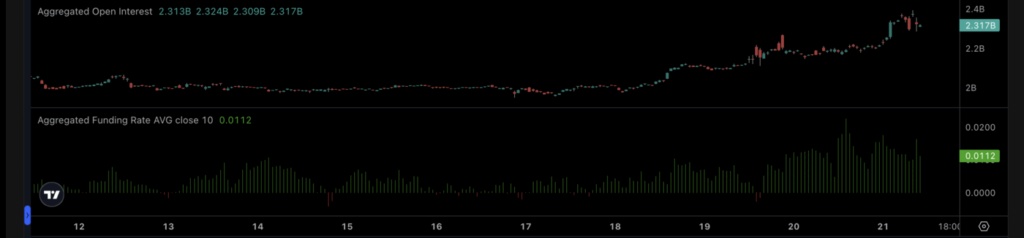
- Aggregated futures open interest climbed from ~$2.0 billion to $2.317 billion between August 12-21, with funding rates turning strongly positive, real leveraged capital backing the move, not just spot buying.
- Genuine adoption catalysts exist beyond the chart: Visa now settles USDC over Solana at a $3.5 billion-plus annualized run rate, and Forward Industries holds over 6.9 million SOL as a treasury strategy.
- Whether SOL keeps climbing depends on whether Bitcoin correlation and crowded long positioning stay supportive, or whether this was a one-off macro-driven bounce; will SOL go back up for good is really a question about which of those forces wins out.
What Triggered the Recent SOL Rally?
Two Washington-linked catalysts, not Solana-specific news, drove the bounce back and go a long way toward answering will Solana recover on its own or needs outside help. The US Treasury announced it would at least double liquidity-support buybacks for longer-dated bonds after the 30-year yield hit a multi-year high, easing a real macro liquidity headwind for risk assets. Separately, President Trump hosted crypto executives at the White House on August 19 and pushed Congress to pass the CLARITY Act, while the SEC proposed new crypto rules the same day. Bitcoin, Ethereum, and SOL all rallied together on the news.
What Do Open Interest and Funding Rate Show?
This is where it gets interesting. Aggregated Solana futures open interest climbed from roughly $2.0 billion in mid-August to $2.317 billion by August 21, a real increase in outstanding leveraged positions, not just price moving on thin volume. At the same time, the aggregated funding rate turned strongly positive (averaging 0.0112, spiking well above that during the rally’s peak days), meaning long positions are paying a premium to shorts, a classic sign of bullish reversal sentiment.
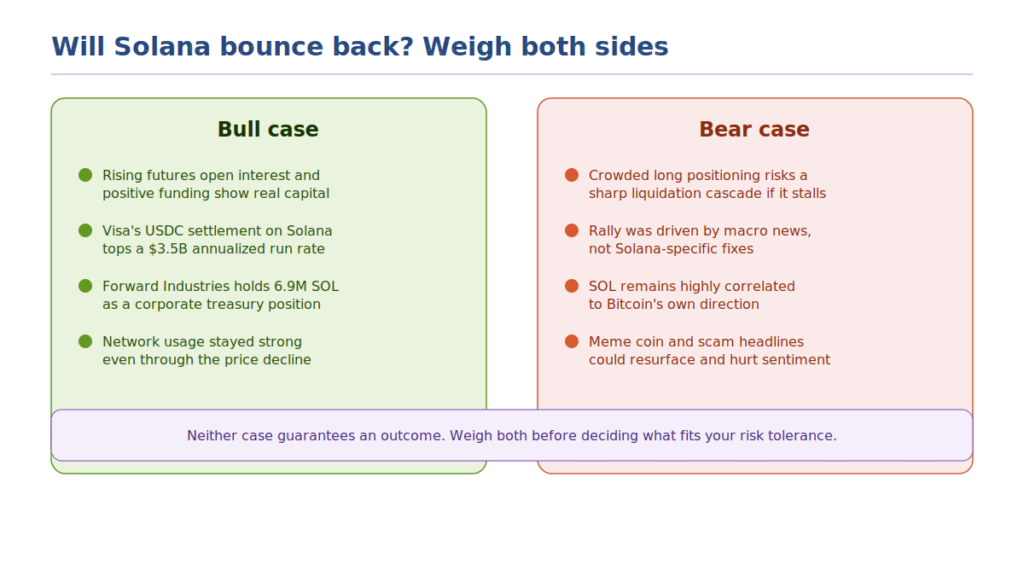
That’s constructive, but it cuts both ways. Rising open interest alongside a strongly positive funding rate also means the rally is now carrying a heavier load of leveraged longs. If momentum stalls, that crowded positioning is exactly the setup that can fuel a sharp long-liquidation cascade, amplifying any pullback rather than just a gentle cooldown.
Can Stablecoin and Payments Growth Help SOL Recover?
This is one of the more durable parts of the SOL recovery prediction and the broader Solana price outlook, separate from any single week’s price action. Solana has quietly become the default settlement layer for a growing list of real payments companies, not just a venue for trading. USDC supply on the network alone sits around $7 billion, and the use cases now span several distinct categories:
- Card network settlement: Visa settles USDC and EURC over Solana for US banking partners including Cross River Bank and Lead Bank, part of a stablecoin business that has scaled into the billions in annualized volume. Mastercard has partnered with MoonPay to connect its 3.5 billion cardholder accounts to Solana wallets.
- Merchant checkout: Shopify integrated Solana Pay so merchants can accept USDC directly, one of the highest-profile e-commerce rollouts in crypto payments, and Shopify is a founding member of the Open USD consortium for native stablecoin checkout later in 2026. Stripe re-enabled crypto payments around USDC on Solana, Ethereum, and Polygon, backed by its $1.1 billion acquisition of stablecoin infrastructure startup Bridge.
- Consumer payments: PayPal’s PYUSD runs natively on Solana, using Token-2022 features like confidential transfers, and its “Pay with Crypto” tool lets merchants accept payment in over 100 cryptocurrencies with instant conversion. PYUSD’s supply on Solana grew roughly 500% year-over-year into early 2026.
- Cross-border remittances: Western Union launched its own USDPT stablecoin on Solana with Anchorage Digital custody, aiming to move a meaningful slice of its $100 billion-plus annual remittance volume onto faster, cheaper rails.
- Payroll and neobanks: Gusto uses Solana for instant USDC payroll payouts, while Revolut and Cash App have both integrated Solana-powered transfers for everyday users.
The Solana Foundation formalized this with payments.org, a dedicated hub showcasing live case studies from Visa, PayPal, Stripe, Western Union, Fiserv, and Worldpay. This kind of stablecoin growth and payment adoption builds real, recurring network demand that doesn’t depend on meme coin cycles or short-term trading sentiment, even if it takes longer to show up in SOL’s price than a single news-driven rally does.
Can Institutional Adoption Support SOL?
Yes, meaningfully, adding real weight to any SOL rebound case beyond price charts alone. Spot Solana ETFs from issuers including Bitwise and Fidelity have accumulated meaningful assets since launch, and Forward Industries has built a corporate treasury strategy holding over 6.9 million SOL (worth close to $1 billion), running its own validator node.
Galaxy Digital has also used Solana to tokenize its own registered stock, part of a broader ecosystem recovery past speculative trading. None of this guarantees a price outcome, but it’s a genuinely different demand base than pure retail speculation.
Can Solana Return to Its All-Time High?
Not easily, and not soon. SOL’s all-time high sits near $293 (January 2025); even after this week’s rally to the low $90s, SOL would need to roughly triple to revisit that level. That’s not impossible over a full cycle, but it would require a sustained accumulation phase and a genuine resistance breakout well beyond this week’s bounce, not a single macro-driven rally.
However, SOL remains highly correlated to Bitcoin, so a reversal in the same macro conditions that sparked this rally (rising yields, risk-off sentiment) could just as easily reverse it. The crowded long positioning visible in the derivatives data adds downside risk if momentum fades. Meme coin activity and scam headlines, a recurring drag through 2026, could resurface and dent sentiment again. And developer growth, while real, takes quarters to show up in price the way a macro catalyst does overnight.
Conclusion
Will Solana bounce back in 2026? It already has, over the past few days, but whether that becomes a lasting SOL recovery 2026 or fades back toward its June lows depends on whether Bitcoin correlation, crowded futures positioning, and meme coin sentiment stay supportive. The underlying adoption story, stablecoin settlement, ETFs, and corporate treasuries, is real and separate from any single week’s price. If you’re watching SOL, you can buy Solana on Mudrex starting from ₹100, check the live SOL/INR rate, or read our Solana price prediction for a longer-term view. Download the Mudrex app to get started, or subscribe to the Mudrex YouTube channel for regular market updates.
FAQs
Will Solana bounce back in 2026?
It already staged a sharp bounce in August, driven by macro catalysts. Whether it holds depends on Bitcoin correlation and whether crowded futures positioning unwinds smoothly or sharply.
When could SOL recover?
Partial recovery is already underway as of late August 2026. A full recovery to all-time highs would likely take a full market cycle, not weeks, and any solana recovery prediction beyond a few months carries real uncertainty.
Why is Solana down?
Bitcoin correlation, a cooling meme coin cycle, and scam-driven confidence damage pulled SOL down for most of 2026 even as network usage stayed strong.
What could trigger the next SOL rally?
Continued macro tailwinds (falling yields, regulatory clarity), renewed meme coin activity, or fresh institutional and stablecoin adoption news.
Can Solana return to its all-time high?
Not easily. SOL would need to roughly triple from current levels to revisit its ~$293 January 2025 high.
How do network activity and stablecoins affect recovery?
Real, recurring demand from Visa’s USDC settlement and other payment adoption on Solana builds a durable case for recovery independent of short-term price swings.
Can institutional adoption support SOL?
Yes. Spot Solana ETFs and corporate treasury holders like Forward Industries add a demand base beyond retail speculation.
What risks could delay a rebound?
Bitcoin correlation reversing, a long-liquidation cascade from crowded futures positioning, and renewed meme coin or scam-related sentiment damage.
This article is a market analysis for educational purposes only and is not financial advice. Cryptocurrency prices, including derivatives metrics like open interest and funding rates, are highly volatile, and past performance does not guarantee future results. Do your own research and consult a qualified financial advisor before making investment decisions.