


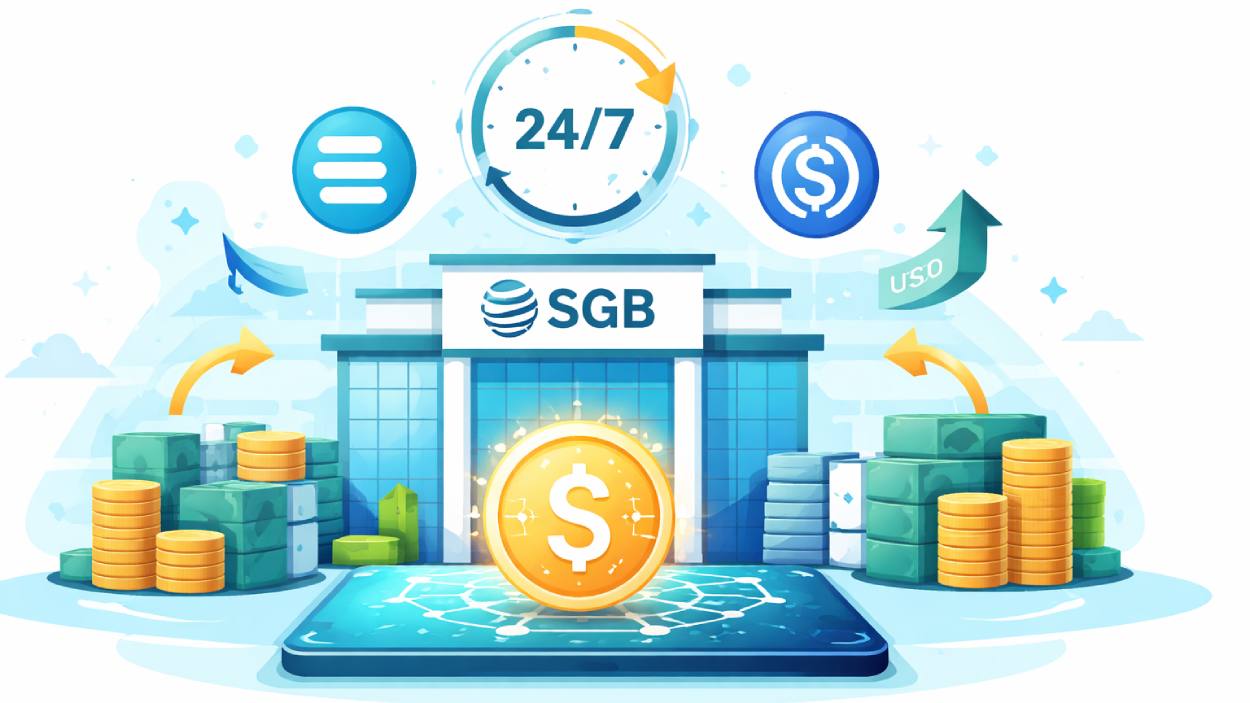
Singapore Gulf Bank has introduced a new stablecoin service that allows institutional clients to convert fiat into digital assets instantly at any time.
Key Takeaways
- Singapore Gulf Bank launched a 24/7 stablecoin mint and redeem service for corporate and high net worth clients.
- USDC is supported at launch for transactions above $100,000, with more stablecoins planned.
- Solana transactions come with zero gas and bank fees for a limited time.
- The move strengthens the bridge between traditional banking and blockchain based finance.
What Happened?
Singapore Gulf Bank has rolled out a stablecoin mint and redeem service designed for institutional and high value clients. The system allows users to convert fiat currency into stablecoins and back instantly, without relying on traditional banking delays.
The service is integrated within the bank’s infrastructure and is now live, with USD Coin as the first supported asset and more tokens expected soon.
🚨JUST IN: Singapore Gulf Bank launches 1:1 USD-USDC stablecoin mint and redeem service on Solana. pic.twitter.com/lTzYIBrH7D
— Coin Bureau (@coinbureau) April 17, 2026
SGB Introduces Real Time Stablecoin Conversion
Singapore Gulf Bank, backed by Bahrain’s sovereign wealth fund Mumtalakat and Singapore’s Whampoa Group, is stepping deeper into digital finance with its latest launch. The bank now enables direct conversion between fiat currency and stablecoins through its internal system, removing the need for intermediaries.
This new service is built into SGB Net, the bank’s proprietary clearing network. It allows funds to move seamlessly between traditional accounts and blockchain networks while maintaining compliance, custody, and risk management standards expected by institutional clients.
According to the bank, this approach helps solve a long standing problem in global finance. Cross-border payments and treasury operations often face delays due to legacy banking systems. With this integration, clients can now move capital across jurisdictions in real time.
SGB CEO Shawn Chan said:
Solana and USDC Lead the Initial Rollout
At launch, the service supports USD Coin for transactions exceeding $100,000, targeting corporate and ultra wealthy clients. The bank has also confirmed plans to expand support to other major stablecoins including USDT, USDe, and USDG.
The rollout spans multiple blockchain networks including Ethereum, Base, Arbitrum, and Avalanche. However, Solana has been prioritized due to its speed and low transaction costs.
To encourage early adoption, Singapore Gulf Bank is offering zero gas fees and no banking charges on Solana transactions for a limited period. Clients using this network will also receive volume based rewards once the promotional phase ends.
This incentive structure is expected to boost activity on both Solana and USDC. The stablecoin already has a strong presence across networks, with significant circulation and usage in decentralized trading environments.
Institutional Focus and Market Impact
The service is clearly aimed at high value users, with a minimum transaction threshold of $100,000. While this excludes retail participants, institutional demand for stablecoin based settlement is growing rapidly.
Singapore Gulf Bank already processes more than $2 billion in monthly fiat transactions, positioning it well to scale this offering. By embedding stablecoin functionality directly into its banking framework, the bank is aligning itself with a broader industry trend where regulated institutions are exploring blockchain based settlement systems.
Earlier in April 2026, the bank strengthened its traditional finance capabilities by joining the correspondent banking network of BNY. This move enhanced its US dollar clearing infrastructure and provided a foundation for launching its digital asset services.
A Shift Toward On Chain Banking Infrastructure
The launch reflects a wider shift in how financial institutions are approaching payments and liquidity management. Instead of relying solely on legacy systems, banks are now testing on chain rails for faster and more efficient settlement.
By connecting fiat accounts directly with blockchain based assets, Singapore Gulf Bank is creating a hybrid model that blends traditional finance with decentralized technology. This setup allows clients to move funds globally without depending on outdated correspondent banking routes.
The bank also plans to expand its multi chain support and add more stablecoins in the coming months, signaling a long term commitment to digital asset infrastructure.
CoinLaw’s Takeaway
I see this as a strong signal that stablecoins are no longer just a crypto niche. In my experience, when banks start embedding these tools directly into their systems, it means the shift is becoming real and practical.
What stands out to me is the focus on instant settlement and real world use cases like treasury and cross-border payments. This is where blockchain actually delivers value. I believe moves like this will push more institutions to adopt similar models, especially as speed and cost efficiency become critical in global finance.