



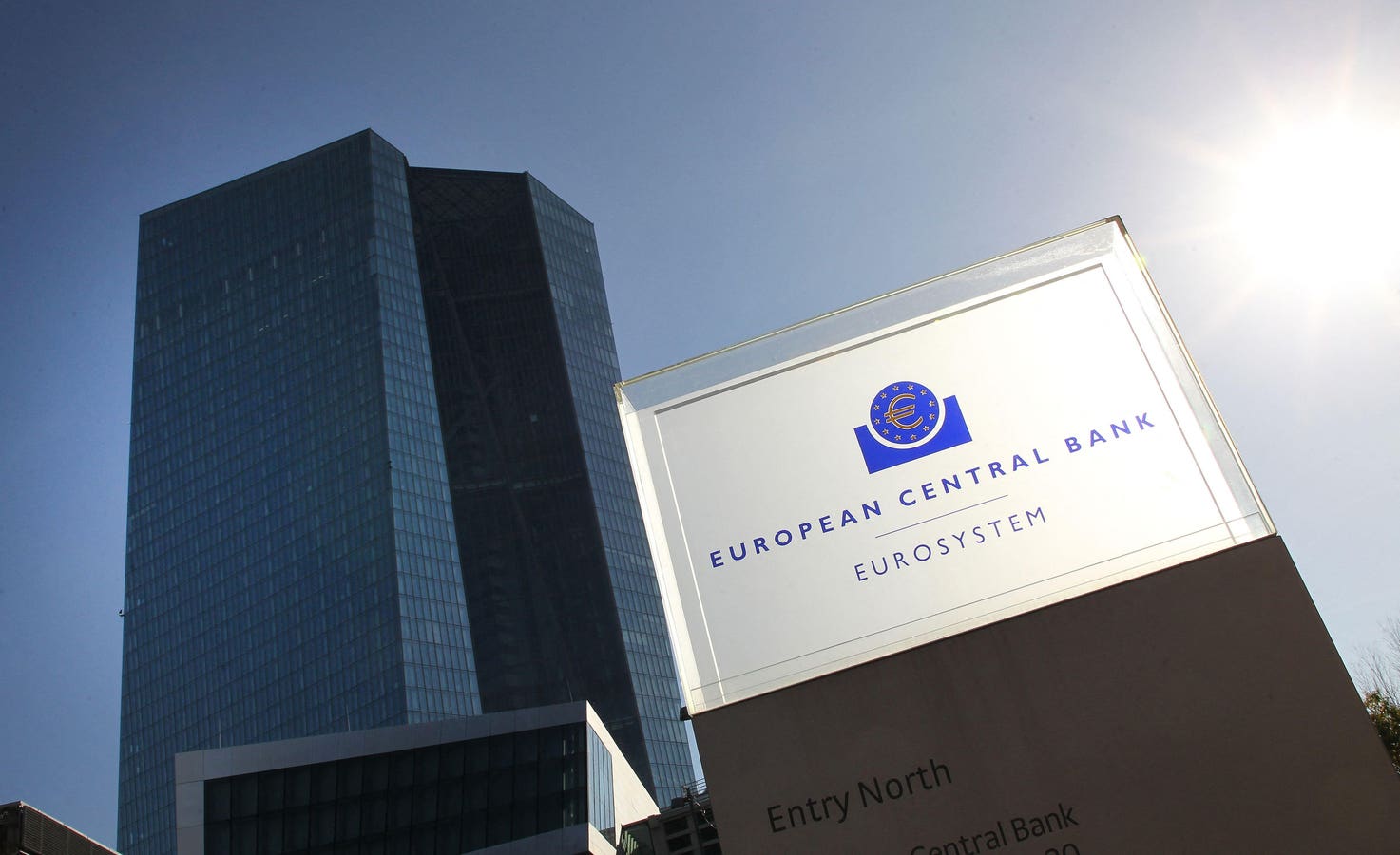
The excitement around stablecoins in Europe was palpable a few months ago, but has largely died off. What comes next?
AFP via Getty Images
When Europe enacted the world’s first comprehensive stablecoin regulation in June 2024, it was a big deal. The MiCA (Markets in Crypto-Assets) regulation created a unified framework for cryptocurrency assets. No other large jurisdiction had anything like MiCA at the time.
MiCA established rules for issuers and service providers, aiming to protect consumers, ensure financial stability, and foster innovation by bringing clarity and consistent oversight across the EU for most digital assets.
At the time MiCA came into force, the United States federal government had yet to enact any digital asset regulation and was more focused on combating malfeasance in the sector. It was possible to imagine that Europe might outpace the U.S. as a cryptocurrency hub.
That didn’t happen. Stablecoins have remained predominantly pegged to the USD. The American fintech firms Tether and Circle still issue the most stablecoins, and together, account for 85% of the market. None of the up-and-coming stablecoin issuers are European. First Digital Labs, for instance, is based in Hong Kong, while Ethena and World Liberty Financial Group are American.
The best-known native European stablecoin, Société Générale-FORGE’s EURCV, has a market capitalization of $76.35 million, miniscule in the world of fiat-backed cryptocurrencies. Globally, EURCV ranks 332nd, well behind the Circle’s euro coin EURC, which is 125th.
Prioritizing Compliance
MiCA was conceived and promulgated based on the belief that comprehensively regulating crypto assets – in particular by protecting consumers – is key to their sustainable growth. That idea has merit, but we question the EU’s premise that a compliance-first approach for cryptocurrency fosters innovation.
Regulations unto themselves are rarely a catalyst for innovation, especially in a sector like financial services. The most successful fintech firms, including European companies like Revolut, Klarna and N26 as well as Ireland-founded Stripe, have focused on addressing market gaps while challenging incumbents first, and sorting out compliance later.
Stablecoin users, whether institutional treasurers or retail crypto traders, focus on liquidity, interoperability, and ecosystem integration. They need stablecoins that work seamlessly across multiple blockchains, integrate with existing DeFi protocols, and maintain consistent availability.
However, European banks approached stablecoin development through their traditional risk management lens. Notably, MiCA requires that stablecoin issuers hold 30% of total reserves in bank deposits, which grows to 60% if the issuance amount is deemed to be “significant.” A study by Visa reckons that these reserve asset requirements regulation “could impair the ability of stablecoin issuers to maximize revenue from interest earned on assets, thus potentially hindering the growth of stablecoins in the region.”
At the same time, by deeming stablecoins safe and supervised, MiCA effectively gives them legitimacy to scale without providing the macro tools (like issuance limits, liquidity facilities, or resolution frameworks) to contain the fallout once they do, notes Daniele D’Alvia, Deputy Director of the Banking and Finance Law Institute at the Center for Commercial Law Studies at Queen Mary University London. With its focus on micro-prudential supervision, the EU risks overlooking macro-fragility and macro-prudential bottlenecks.
Digital Euro Distraction
Further gumming up the works in Europe’s approach to stablecoins is the confusing conversation about a digital euro. Europe is not unique in its almost reflexive attempt to edge aside decentralized cryptocurrencies with a digital fiat currency comfortably in control of central bankers. Countries like China and India – though both seem to be subtly adjusting their tone as stablecoins grow in market capitalization and use cases – have tread a similar path.
Some European officials seem to believe that they can use a digital euro to limit the influence of USD stablecoins on the European financial system. Chief among these arguments is that a digital euro would limit the likelihood of foreign currency stablecoins becoming widely used for retail payments within the euro area.
The digital euro could only slow the spread of USD stablecoins in Europe if it rendered their use unnecessary. That would require the digital euro to pursue comparable objectives and address the same use cases as American stablecoins.
But the digital euro is a different beast altogether. Unlike stablecoins, it is not focused on efficiency gains, technological innovation, or global scalability in payments. Instead, the digital euro aims to be the digital equivalent of cash.
Five years after the high tide of CBDC hype, with the exception of China, most countries are quietly dialing down their efforts to launch digital fiat currencies because the benefits of adoption are insufficient to justify the costs involved. Meanwhile, the ascendancy of dollar-denominated stablecoins is strengthening so-called “dollar hegemony” as the greenback appears poised to dominate the next generation of financial flows.
“The digital euro does nothing to counter this development and therefore misses the opportunity to position the euro as an attractive digital currency beyond Europe,” notes the Association of German Banks.
The European Bank Consortium Has A Plan
It is not too late for Europe to accelerate stablecoin adoption and develop a viable European alternative to Tether, USDC and other American fiat-backed digital currencies. Despite its shortcomings, MiCA did establish important regulatory rules of the road that can be beneficial to the broader European cryptocurrency market if financial institutions are incentivized to take a more proactive approach to stablecoins.
A key development that may augur well for Europe’s cryptocurrency market was the announcement in September 2025 that nine major European banks will collaborate to launch a euro-denominated stablecoin. The consortium, which includes ING, UniCredit, CaixaBank, Danske Bank, DekaBank, Banca Sella, KBC, SEB, and Raiffeisen Bank International, has formed a Netherlands-based company that intends to provide a feasible European alternative to USD stablecoins.
Time is of the essence. The next steps should be to accelerate regulatory engagement, build out tech infrastructure for compliance (AML/CFT, monitoring), and secure early enterprise use cases beyond crypto trading—such as faster cross-border payments and settlement of tokenized assets. The consortium should capitalize on the scale and reach of its members to distribute risk and boost liquidity.
If the consortium takes these steps, it could position its stablecoin as a trusted European-controlled option to reduce Europe’s dependency on USD stablecoins. The result would be enhanced European payment autonomy.
On the other hand, if Europe slow-walks this initiative, it may have to resign itself to many more decades of dollar dominance in the global financial system.